Spring departed with summer’s arrival at 10:57 a.m. on the 21st. The first day of summer is always a little sad for me. I celebrate spring and am sorry to see the ever-changing awakening of the garden come to an end. But the sadness is fleeting. Summer has its own charms and, truth be told, life in the garden never stagnates. Heaven knows the weeds don’t take a break. In fact, they’ve been so enthusiastic this spring, I suspect I’ll be waging a war on weeds for weeks to come.
But even weeding has its pleasures. Oh, it’s not just in the eviction of a deeply-rooted pigweed invasion or discouraging the steady advance of bee-and-butterfly-favorite goldenrod (a plant that doesn’t understand boundaries). The freeing of perennial plants competing with those weeds is most satisfying. Once freed of their bullying companions, they can grow and flourish and be as they are intended to be in the garden.
What do I consider a weed? It’s simple: anything growing where it shouldn’t be. By that reasoning, blackberries, ferns, rugosa roses, and flowering quince all become weeds when they volunteer in places they’re not wanted. And then there are the “weeds” that once spotted, are invited to stay.
On the other hand, plants that some would consider weeds are welcomed here when discovered. The sunshine yellow of buttercups are always welcome, as are daisies. If they appear in an inconvenient place, I move them to another spot. I remember fondly daisies and buttercups, white campion, black-eyed Susans, and (my favorite) chicory with its blue flowers. Sadly, they’ve been replaced for the most part by other, invasive plants like garlic mustard and wild parsnip (unwelcome and dangerous), along with the usual, not-in-my-yard weeds.
While I have more than enough weeds in my own yard to contend with, when I take a walk down this rural road, I sometimes carry a pair of pruners with me if I know wild parsnip is growing in the wild areas. It’s quick and easy enough to behead the plant if it’s in flower, preventing seeds from forming and spreading the problem throughout the neighborhood.
Back home, unwelcome volunteers are pulled out by their roots and composted. Those with an especially stubborn streak or difficult to remove taproot, I remove as much as I can then cut back any growth that reemerges. Eventually, the plant gives up. But there are some I need to work on this summer now that I have the time to do the job right.
Several years ago a dear friend gave me a start of a beautiful vine she had growing at the side of her garage. It was called porcelain berry and boasted berries in shades of green, blue, and purple. At first, it was a real beauty. Then it showed its true nature. What I discovered is that porcelain berry is not only a bully in the garden but classified as an invasive plant.
Each year since then I’ve cut it back, but it reappears, twining through the Yellow Monster (a very overgrown forsythia patch) and trying to reach other areas of the yard. This year when I cut it back, I’ll be resorting to something I rarely use: chemical controls. Since porcelain berry is so aggressive and seems to recover easily from any attempt at manual control, I’ll be hand painting a dab of Roundup on the cut ends of its stems. I dislike using Roundup. Sometimes it is necessary, but I only use it in careful applications where I limit its affects. I never broadcast spray it.
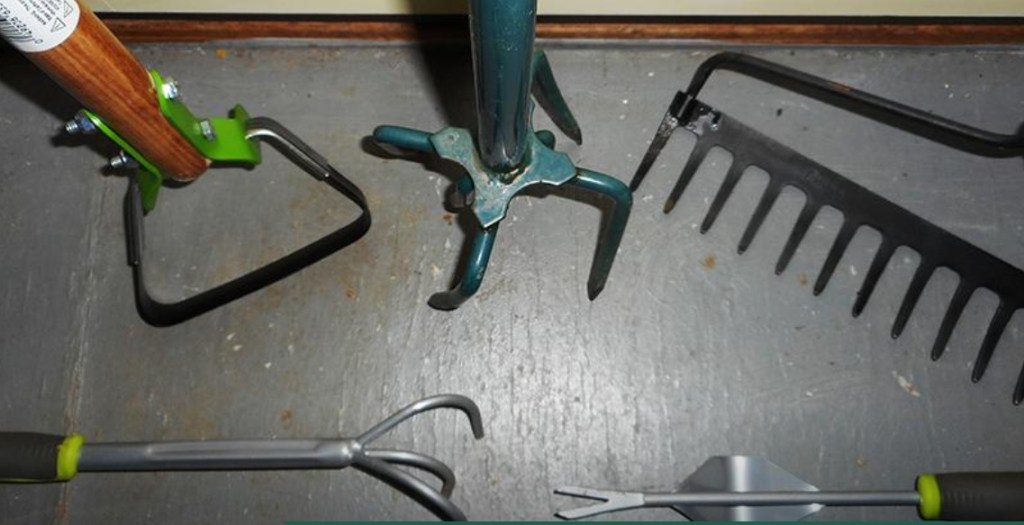
In the meantime, I’m still playing catch-up for days I’ve been unable to work in the garden. The weeds never take a day off. I’m entering the battle well armed. I have my pruners and loppers, of course, and a long-handled, toothed weed twist and pull, along with my favorite saddle hoe. My newest weapon in the war on weeds is a hori hori knife. I ordered one after reading many rave reviews, and I have to admit, it does the job admirably. A cutting blade that will also dig out the roots of stubborn weeds, I suspect I’ll find many uses for this formidable-looking knife.
If you’re curious about the tools in my weed warrior arsenal, check out this article I wrote a while back: https://www.uvm.edu/news/story/winning-war-weeds.
Discover more from Pen, Paper, Plant
Subscribe to get the latest posts sent to your email.
 Pen, Paper, Plant