Not only does weeding make the garden neater, it also presents an opportunity to view plants up close. Most times, weeding frees a plant that just needs a bit more sun and some space to get growing to its best potential. But sometimes weeding reveals an ugly truth: this plant tastes yummy.
Such was the case for several hostas growing beneath a maple tree in my back yard. I’d planted the hostas there last spring when I dug out and separated a large hosta growing elsewhere in the garden. It didn’t take long for the neighborhood deer to discover the candy counter.
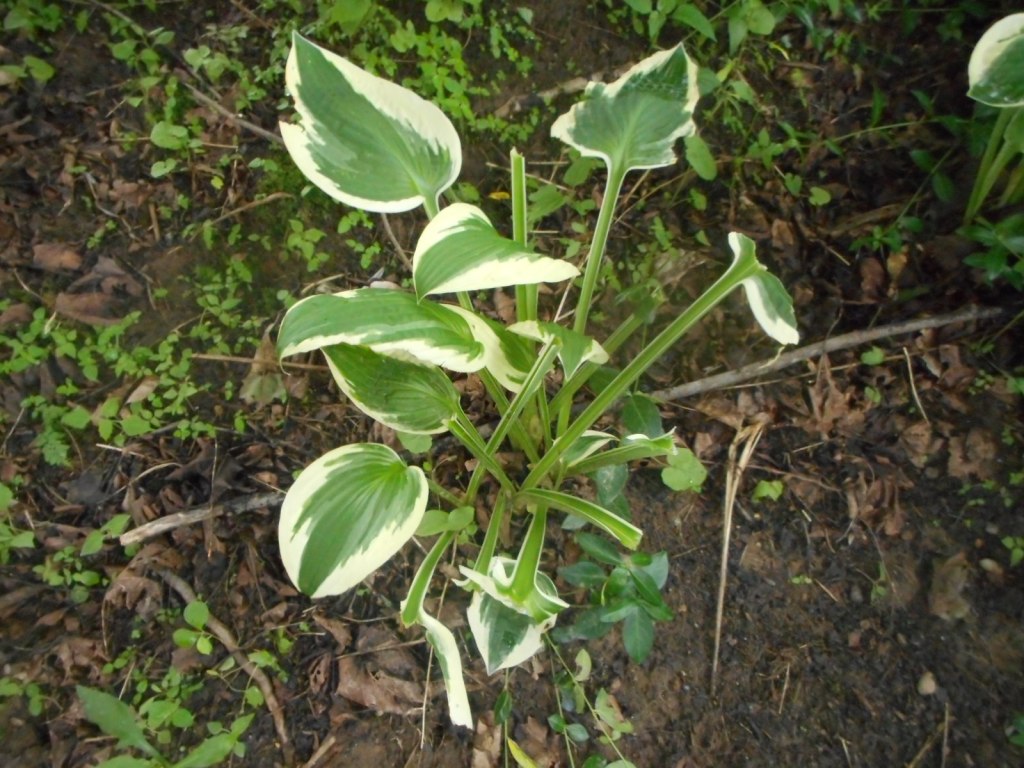
Hosta is a favorite plant of our local deer. Call it “deer candy” and you’ve got a pretty accurate description. Deer will very efficiently nibble hosta plants right down to nubs no more than an inch or two high. In this case, the damage wasn’t quite so extensive and, perhaps because I’ve been working in this area, the nibbler hasn’t finished off this bed of hostas. Yet.
So, what’s a gardener to do other than hope for the best? That’s a tough question because deer will graze on all sorts of greenery. Sometimes the victim is one you’d least expect.
Years back I invested in several holly plants, thinking nothing would bother their tough, spiny leaves. I couldn’t have been more wrong. The deer loved them. Since the spot I wanted the holly in was where the deer regularly pass through the yard, I gave up and chose something else to plant there. Oftentimes, finding a substitute that deer won’t be so happy to devour is the best choice.
Choosing deer-resistant plants can be an easy fix, unless conditions are particularly harsh and food sources become scarce. Deer will eat practically anything if hungry enough. And there are plants (like hosta) they will select over others when given a choice. A human planted and maintained garden offers all sorts of possibilities for foraging deer.
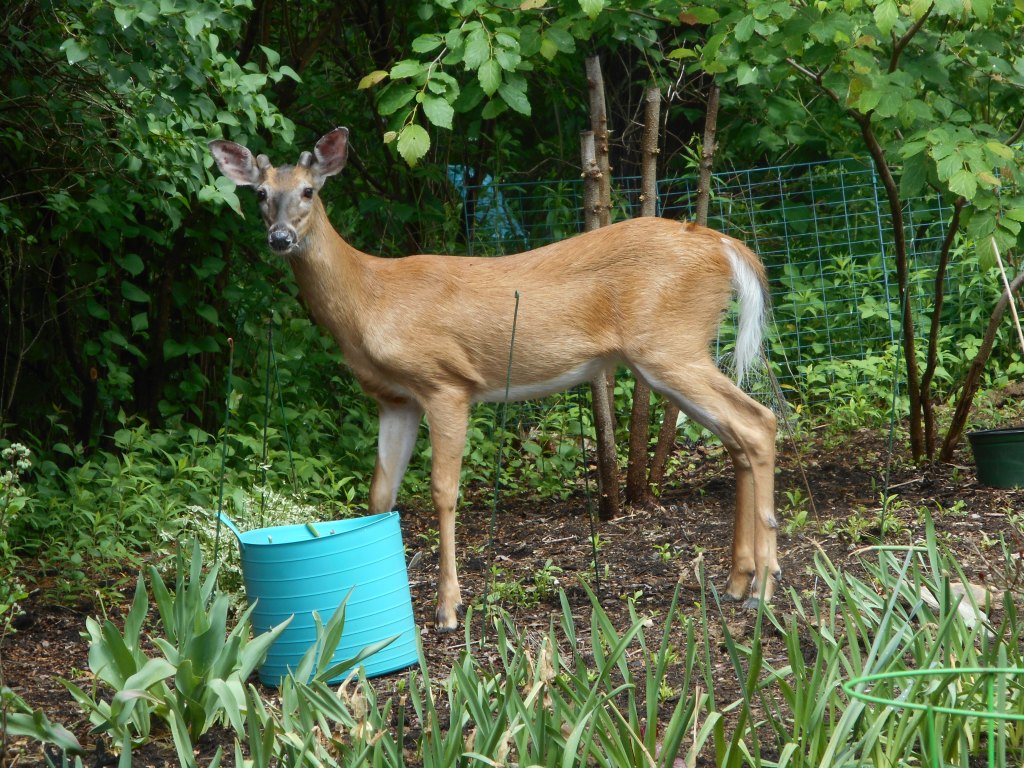
The fall I moved into this house, I planted a lovely line of tulips and other spring bulbs along the winding edge of a path I intended to meander through future garden beds, replacing the carefully manicured lawn. The following spring, the various bulbs emerged and promised weeks of flowers. Yellow, white, and apricot daffodils made colorful patches in the still mostly-brown landscape. When the tulip leaves made their appearance, I watched each day as they grew taller and flower buds emerged. I reveled in their progress and could hardly wait for the day when their flowers would open. That is, until the day I discovered each pair of leaves along a stretch of the tulips I’d planted had a crescent-shaped bite where the tips of the leaves had been. Somebody had mistaken my tulips for a salad bar. Bad Bambi.
This story does have a happy ending. The stalks containing the flower buds weren’t very high yet and the nibbler who paused to trim my tulips didn’t harm them. That meant there still was a chance I’d have that row of tulips to enjoy. In an attempt to defend the soon-to-be flowers, I sprinkled cayenne pepper along the ground by the tulips. Maye this discouraged the deer or maybe it found someplace else to dine. Either way, the tulips bloomed and, even with their crescent-trimmed leaves, they made a lovely show that spring.
Since then, I’ve replaced the tulips in that part of the yard with daffodils, a plant deer show no interest in. And that, I think, is the best way to convince grazing deer to move along past the garden. Switch to deer-resistant plants or plant them among those more likely to attract the interest of hungry deer in an attempt at camouflage.
In addition to that tactic, I use wire cloches to cover new plants that might attract deer or other nibblers such as rabbits. They work very well and, once the plant is older and better able to recover from critter nibbles, I remove them.
And then there’s my favorite spice (for use in the garden, that is): cayenne. While I could probably discourage the hosta-hungry deer with a liberal does of cayenne, I really don’t like the way the rust-colored powder looks on my plants. I’ve occasionally sprinkled it on the mulch around low-growing plants I want to protect from the groundhog or rabbit, and it seemed to help.
I even used cayenne once on a young fruit tree. I’d just finished planting it when I glanced up toward the woods. There at the very edge of the undergrowth was a young deer who appeared very interested in what I was doing. I could almost hear its thoughts about where to get dinner that night. What could I do? I ran to the house and grabbed a jar of cayenne then liberally “spiced” that tree. And that seemed to do the trick. The little tree survived the deer, but unfortunately it fell victim over the winter to nibbling by much smaller critters who girdled the young tree, dooming it. That year I discovered expanding trunk wraps for newly planted trees.
In the garden, sometimes I win a battle and still lose the plant. I celebrate each success and hope to learn something from each casualty. I keep learning, visitors from the woods pass through, and the garden keeps growing. In the long run, it’s all very good adventure.

Discover more from Pen, Paper, Plant
Subscribe to get the latest posts sent to your email.
 Pen, Paper, Plant