When I was a young girl, I remember walking along the road and picking wildflowers. Daisies. Black-eyed Susans. Chicory. White Campion. Queen Anne’s Lace. Buttercups. Even Dandelions. Some of them I didn’t learn the names of until recently when a Google search provided them. And I’m glad I did because many of them have been displaced by plants I don’t recall seeing all those years ago.
These days that strip of land along the familiar road still has the occasional daisy or buttercup, and Queen Anne’s lace is still present in good numbers, but so are undesirables like ragweed, and invasives such as garlic mustard and wild parsnip (this one can be dangerous, too). The old, familiar goldenrod is still abundant, but then, goldenrod tends to be aggressive so it’s fighting back and holding its own against the invaders.
The problem with invasive plants is that they won’t play nice and co-exist with the natives. They tend to crowd native plants out and take over the wild spaces—large and small—where wildflowers once bloomed and native plants made their home.
When I encounter one of these unwelcome plants encroaching on my yard, I will remove them. I pull, cut, and dispose of them. Sometimes they feed the compost. Sometimes, and always if they’ve gone to seed, they join the household trash. It’s better to remove weeds, especially invasives, sooner rather than later. It’s vital to remove them before they go to seed. A single garlic mustard plant can produce hundreds—sometime thousands—of seeds. That’s a lot of weeds to pull in future days.
If you come across a wild parsnip plant (Pastinaca sativa) in your yard, remove it, but do so carefully. As I mentioned, this plant can be dangerous. The sap from wild parsnip reacts with sunlight and, if you get it on your skin and expose it to the sun, a nasty chemical burn can result (phytophotodermatitis). Always wear gloves and long sleeves when dealing with wild parsnip and refrain from touching your face or other exposed skin until you’ve removed anything exposed to the sap.
As for those wildflowers? When I find a volunteer daisy growing in the driveway or a path in the garden where it doesn’t belong, I transplant it to some other spot where it can grow and be enjoyed. For vanished wildflowers like chicory, I have another solution: grow them again. A packet of seeds can provide a bed of these wonderful blue flowers in the garden. And who knows? Perhaps they’ll find their way to the roadside once again.
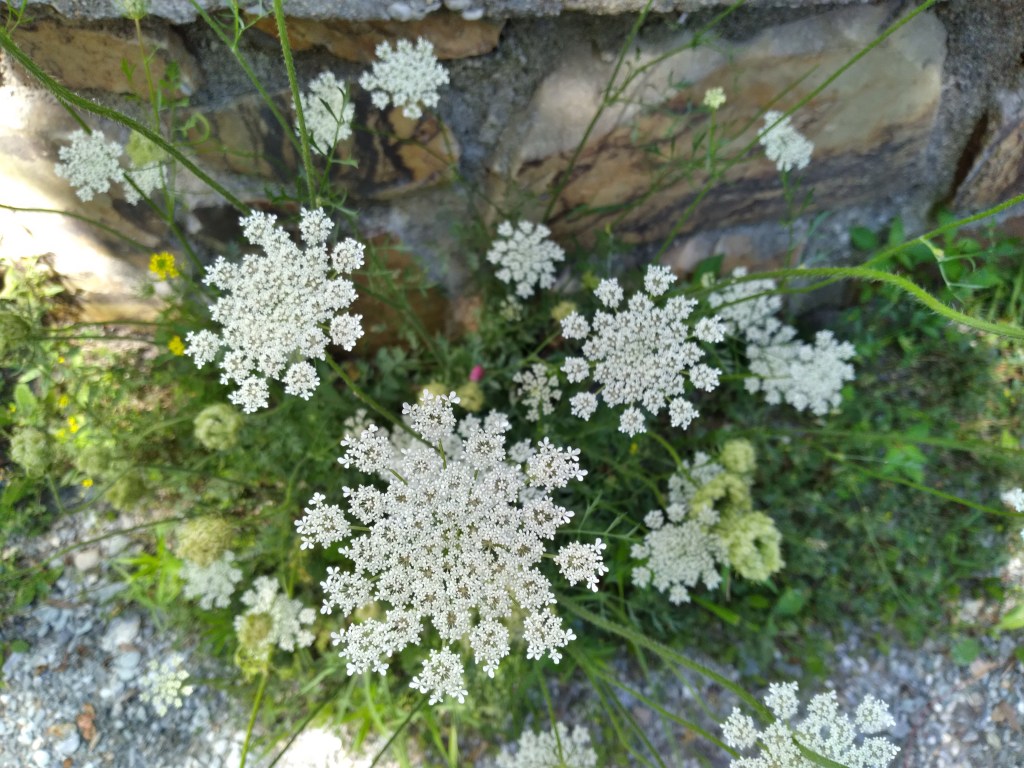
Queen Anne’s Lace
* * *
Discover more from Pen, Paper, Plant
Subscribe to get the latest posts sent to your email.
 Pen, Paper, Plant