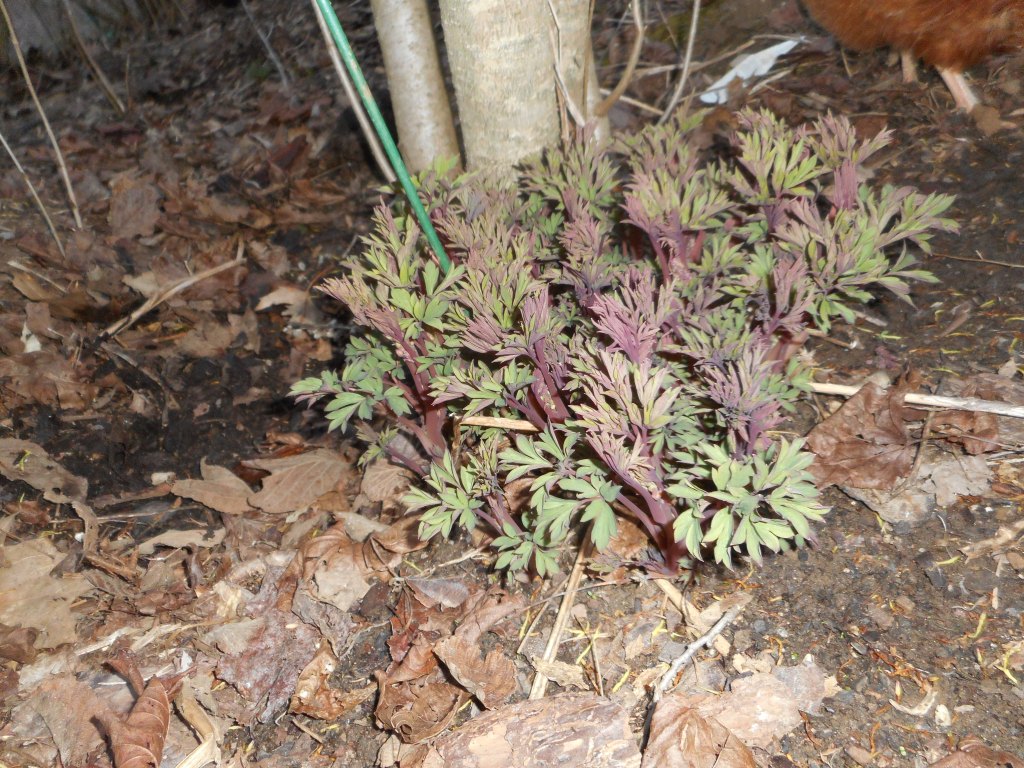
Bleeding heart awakes from its three-season dormancy.
As I begin writing this on Tuesday afternoon, I can hear the rain tapping on the sunroom roof. The skies have turned gray, leaving no remnant of this morning’s blue. Outside my window, the witch hazel’s petals have fallen with only a few stubborn bits of yellow remaining, but its dull red leaf buds have swollen, and the little tree is covered in them: leaf out isn’t far off.
One of the reasons I love springtime is that every day is different. Every. Single. Day. Something is budding, something else is emerging from the ground, while yet another plant is dropping petals having finished blooming.
Even though it’s still early in the season, there are bits of color where the early flowers are blooming, and more green appears each day. Today’s flowers include winter aconite’s (Eranthis hyemalis) ground-hugging yellow flowers, early daffodils (Narcissus) in traditional yellow, a few crocus (Crocus), periwinkle (Vinca minor) with its blue flowers on wandering vines, and a patch of tiny, blue Siberian squill (Scilla). They’re a subtle preview of things to come amid a still mostly brown landscape.
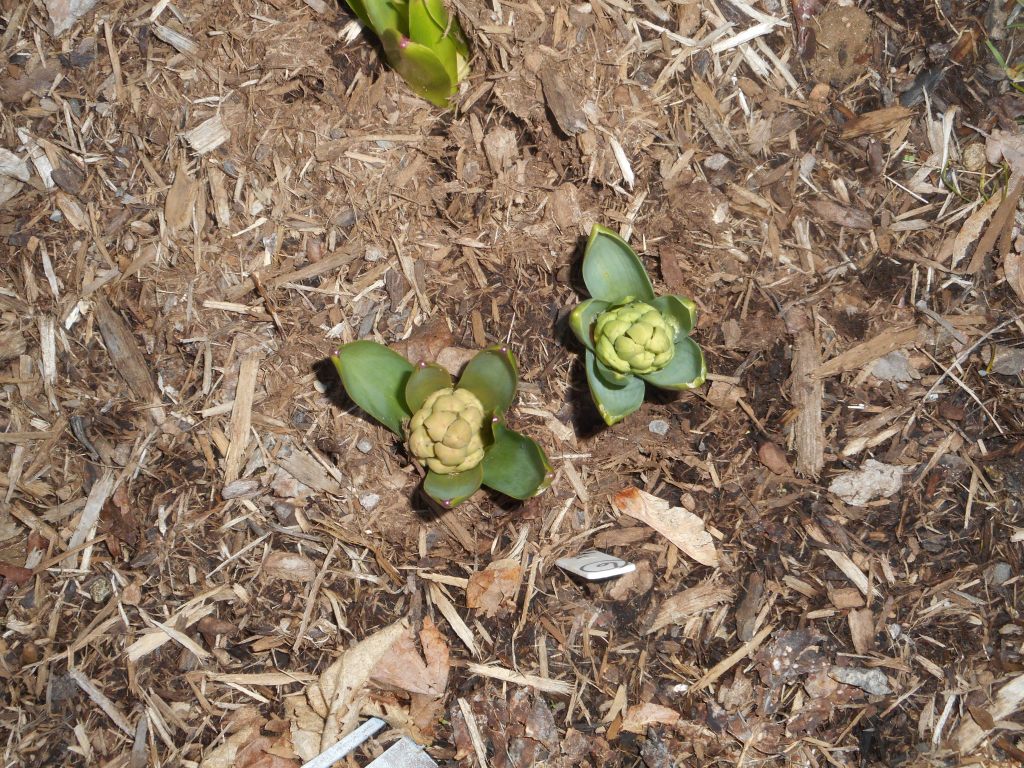
Hyacinths emerging in early spring.
Other flowers, primarily spring-blooming bulbs, have emerged from the ground to varying degrees. I’ve spied the tips of hyacinth (Hyacinthus orientalis) and tulips (Tulipa), and many, many more daffodils of several types. Their foliage grows so rapidly when the weather is mild that I sometimes wonder if I spent a day just watching the garden, would I see them grow?
Not to be outdone, the bleeding hearts (Lamprocapnos spectabilis, formerly known as Dicentra spectabilis) are making an appearance. They’ll grow fast and put on a wonderful, old-fashioned show when they bloom—one much appreciated by the hummingbirds who will be arriving soon. Once the flowers fade, the bleeding heart plants will die back and go dormant until spring arrives again.
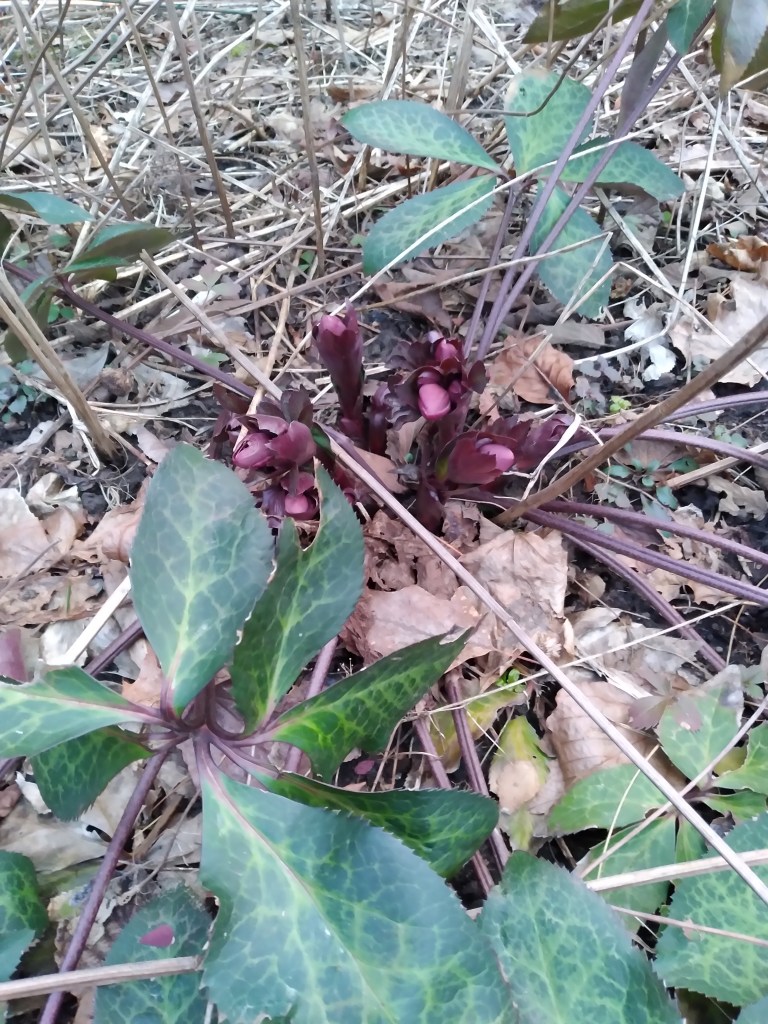
New hellebore flowers emerge in spring amid last year’s leaves.
And then there are the “leftovers” from last year, those flowering plants that remain evergreen over the winter but show the season’s wear and tear. They include two of my favorites: coral bells (Heuchera) and Lenten Rose (Hellebore). The heuchera keep their color all year round but the older leaves grow a bit limp over winter, and I’ll trim them back once new leaves emerge. Likewise, the foliage of the hellebore retains its color over the winter, but the leaves tend to flop over after being subjected to the weight of the snow. The tips of this year’s flowers have appeared, and new foliage will follow.
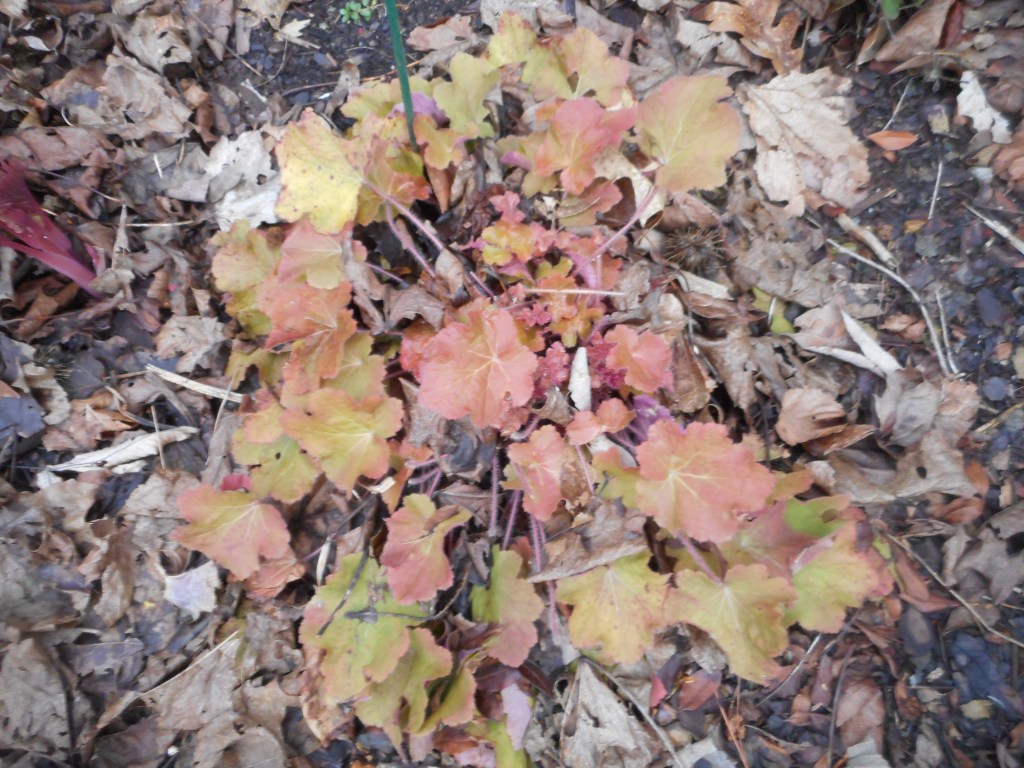
The coppery leaves of this heuchera keep their color all winter long.
It seems the squirrels have been harvesting and moving bulbs again. I plant crocus each fall. Sometimes they bloom in the spring, but often they vanish like my first plantings of snowdrops (Galanthus) did long ago. I’m not sure where the crocus bulbs have ended up (maybe a winter snack for the ever-active squirrels), but each spring I see a growing clump of snowdrops on two neighbors’ properties where no human would have planted them. Sigh. At least I can admire them from afar, along with the expanding patch of snowdrops on the other side of my house that the squirrels have yet to plunder.
I hope you enjoy the photos of my awakening garden. What’s happening in your garden this week?
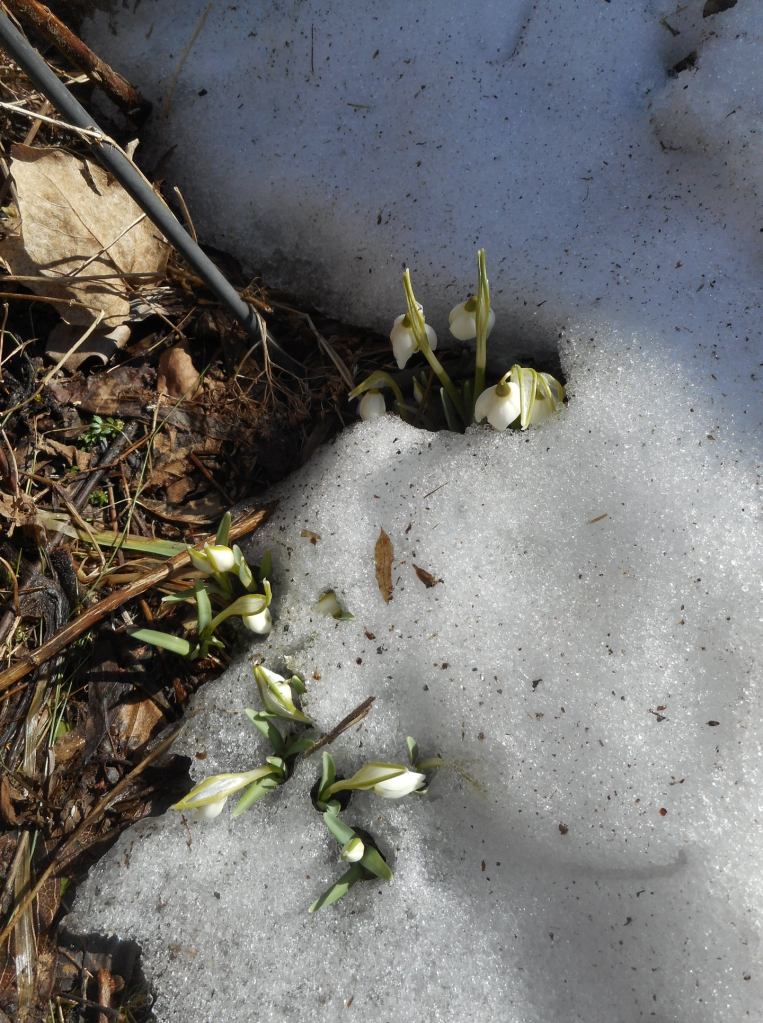
Snowdrops in the snow.
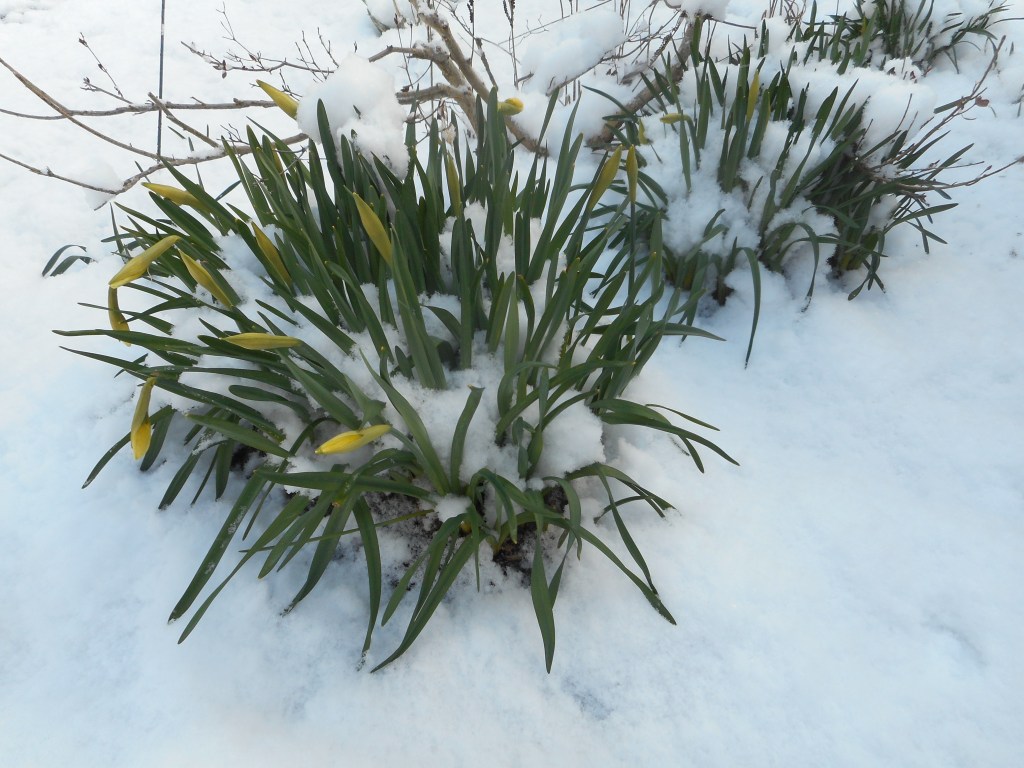
Daffodils pause and wait patiently for the snow to melt after winter’s last hurrah.
* * * * *
Discover more from Pen, Paper, Plant
Subscribe to get the latest posts sent to your email.
 Pen, Paper, Plant