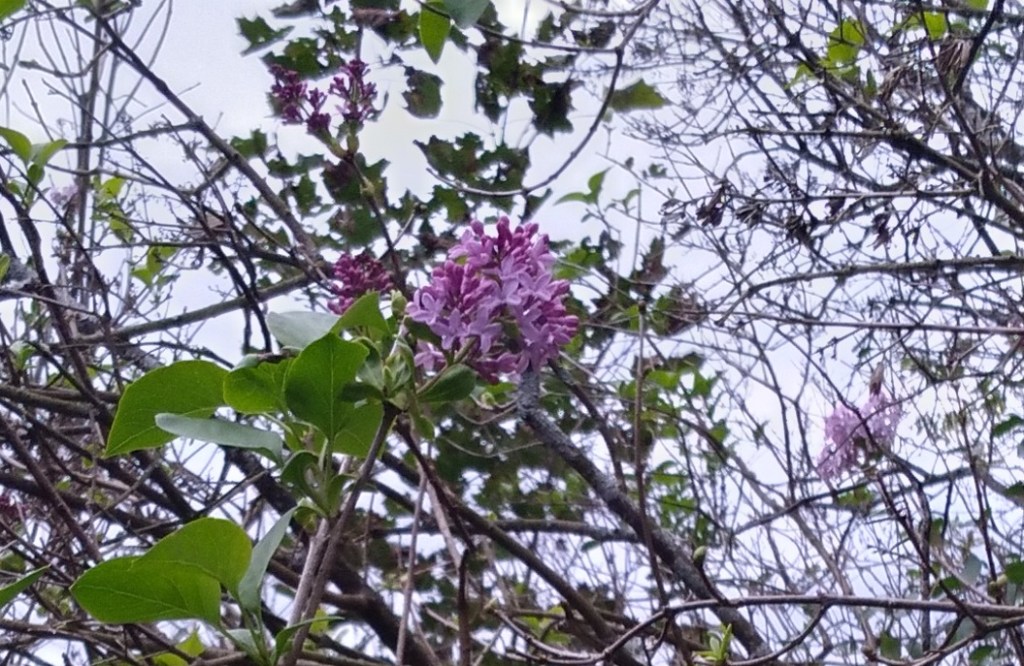
I absolutely love lilacs (Syringa vulgaris). They are the essence of spring in one wonderful breath. Their flowering inevitably makes me smile. Until now.
Several years ago, in order to add a touch of spring to late summer/early fall, I added a reblooming lilac bush to my yard. It’s planted beside my driveway and sports smaller leaves and more delicate blooms that its cousins who only bloom in May. When I spot its second set of blooms, I know autumn is on the way and the growing season is coming to an end, but the reblooming lilacs still made me smile.
When I spotted tiny bunches of pale violet flowers a couple of weeks ago on one of the bushes in the row of lilacs lining my back yard, I was confused. Had some volunteer vine invaded the struggling lilacs that had shed their leaves late in the summer? A closer look disproved that theory. My ancient lilacs were blooming. Not in a “welcome spring!” kind of way, just a cluster of flowers here and there like sad little pompoms on the nearly naked shrubs.
Another spring bloomer in my garden, forsythia, has a habit of throwing out a few branches of yellow blossoms in the fall. I’ve just laughed it off as a confusion on the part of the huge shrub that’s threatening to take over the hillside it grows on. Lilacs are another matter. The lilacs have been growing in that row for over 70 years. Their dire appearance when their leaves began to wither and drop weeks earlier than usual saddened and concerned me. The sight of flowers on their bare branches set off alarm bells.
So, what’s going on? According to my research (thank you, Mr. Google!), spring blooming plants will flower in fall following a period of stressful growing conditions. This summer’s weather certainly qualifies.
To begin with, the weeks of very wet and humid weather were perfect conditions for an attack of a leaf blight that caused their leaves to wither and drop, leaving the shrubs nearly naked by September. Of course, without a closer look at the leaves as it was happening, there’s no way to identify what type of disease or blight might have caused it, though the sad state of the lilacs is readily apparent.
Lilacs, like many spring blooming shrubs, form next year’s flower buds soon after the current year’s flowers have faded. That’s why any pruning done later in the season can result in fewer flowers in the spring. The flowers I’m seeing now are on buds intended to bloom next year, so there will undoubtedly be fewer flowers in May.
For now, I shall keep my fingers crossed that my lilac row is resilient enough to weather the stressful conditions of this past summer and the rest of the flowers-to-be bloom on schedule next year.
* * *
Discover more from Pen, Paper, Plant
Subscribe to get the latest posts sent to your email.

