Today I’m sharing a few words about one of my favorite garden helpers: mulch.
You’ve planted your garden, watered the plants well, and stood back and admired your hard work. But is something missing? It is if you haven’t added a layer of mulch on top of the soil.
You’ve seen it in bags at the garden center or perhaps in a large pile delivered to your neighbor’s yard. And you may have wondered if mulching a home garden is worth the expense and time involved. The answer is yes.
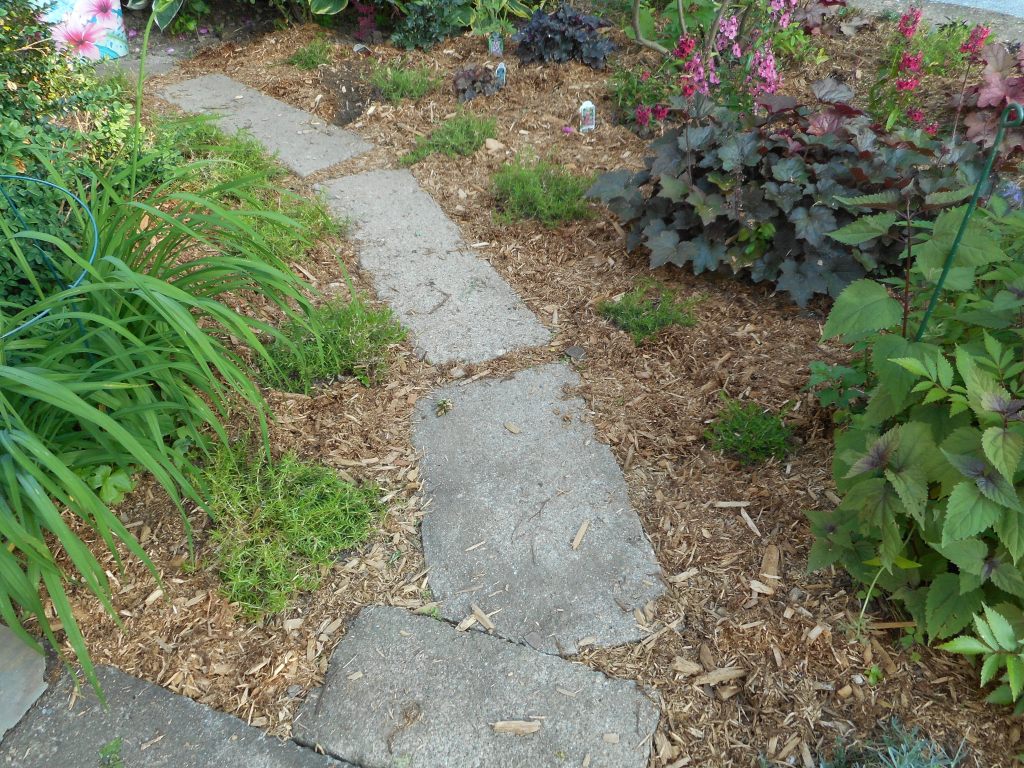
Bark mulch protects the soil along this garden pathway.
Mulch benefits both the garden and the gardener in many ways. And there are many types of mulch to choose from, depending on the gardener’s needs. If nothing else, a simple layer of mulch adds to the visual appeal of a garden bed.
More importantly, mulch will help suppress the germination of weed seeds existing on and in the soil. It can also prevent airborne weed seeds from contacting the soil, so they fail to germinate. Those that do will be much easier to pull in the loose texture of the mulch than they would be if rooted in the ground.
Mulch acts as a barrier between soil and the environment above. It helps the soil retain moisture, particularly important during low-rain periods. Not only does it help regulate moisture loss, but it insulates the ground from erratic or extreme variations in temperature, providing a more gradual change in ground temperature and protecting roots from damage. Mulch keeps soil cooler in summer and warmer in winter.
Organic (plant-based) mulches, such as wood chips or compost, feed the soil as they decompose. They can also assist with preventing soil erosion, and absorb the impact of heavy rains and deflect runoff.
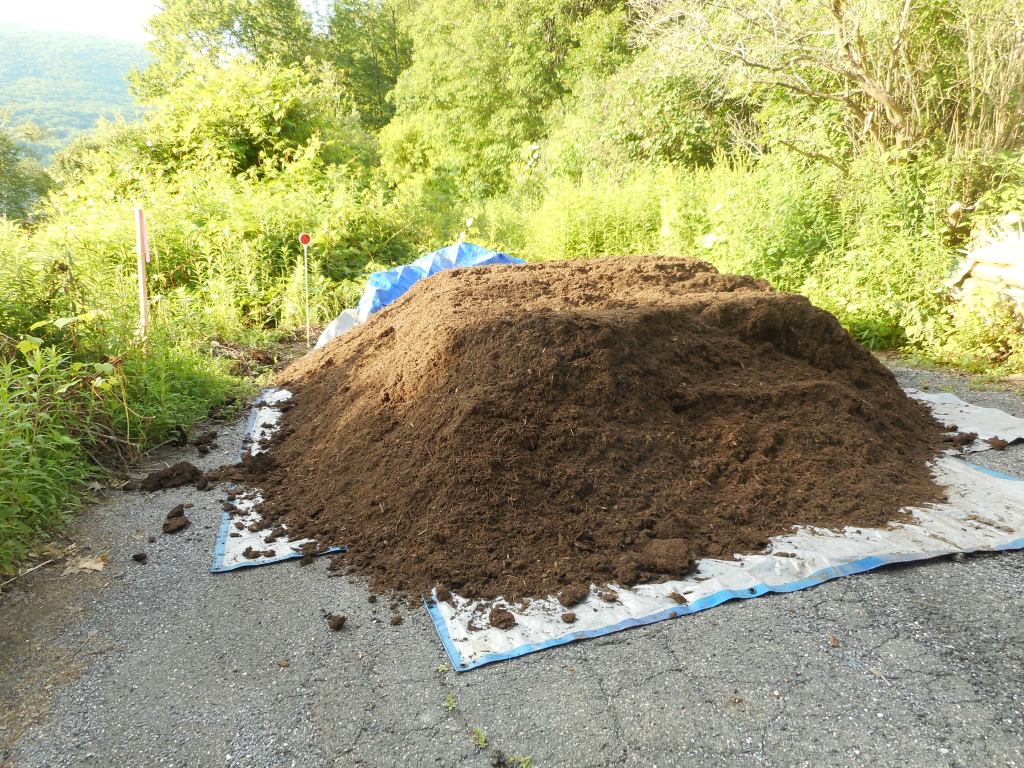
Perhaps the most common material for mulch is wood or bark chips, either in chunks or shredded. This type of mulch is readily available in bags at retailers during the growing season. It can also be purchased in bulk by the cubic yard at garden centers. If you have room for delivery of a small mountain of mulch, bulk purchase is likely to be cost effective.
Dried grass clippings, pine needles, or composted leaves from the prior fall can be applied as mulch and make an economical alternative to purchased materials.
If you make your own compost, simply apply a 2-3 inch layer around plants on top of the soil as a mulch. In addition to suppressing weeds, the compost will feed the soil as water filters through it. Plan on reapplying compost mulch each growing season.
When applying mulch, be sure to allow room between it and the stems of plants to prevent damage. We’ve all seen “mulch volcanos” surrounding young trees, a practice that will eventually damage the bark and threaten the tree’s health. Instead, mulch should be spread evenly over the soil surface and away from tree bark or plant stems.
If you prefer something that doesn’t need to be reapplied annually, more permanent options include small stones or rubber or synthetic chips.
There are online calculators to assist you in determining how much mulch you’ll need. Measure the area (width and length) of the bed(s) you’ll be applying it to. You’ll also need to know how deep you want the mulch to be. In general, a finer textured mulch should be approximately 2-3 inches deep and a coarse mulch 3-4 inches deep.
Whether you choose a plant-based, stone, or manufactured mulch, mulching your garden can result in time saved weeding and watering your garden. And it’s going to look oh, so good.
* * *
Mulch purchased in individual bags may be neater,
but when purchased in bulk, a small mountain
of mulch can be inspiring.
* * *
Discover more from Pen, Paper, Plant
Subscribe to get the latest posts sent to your email.

